

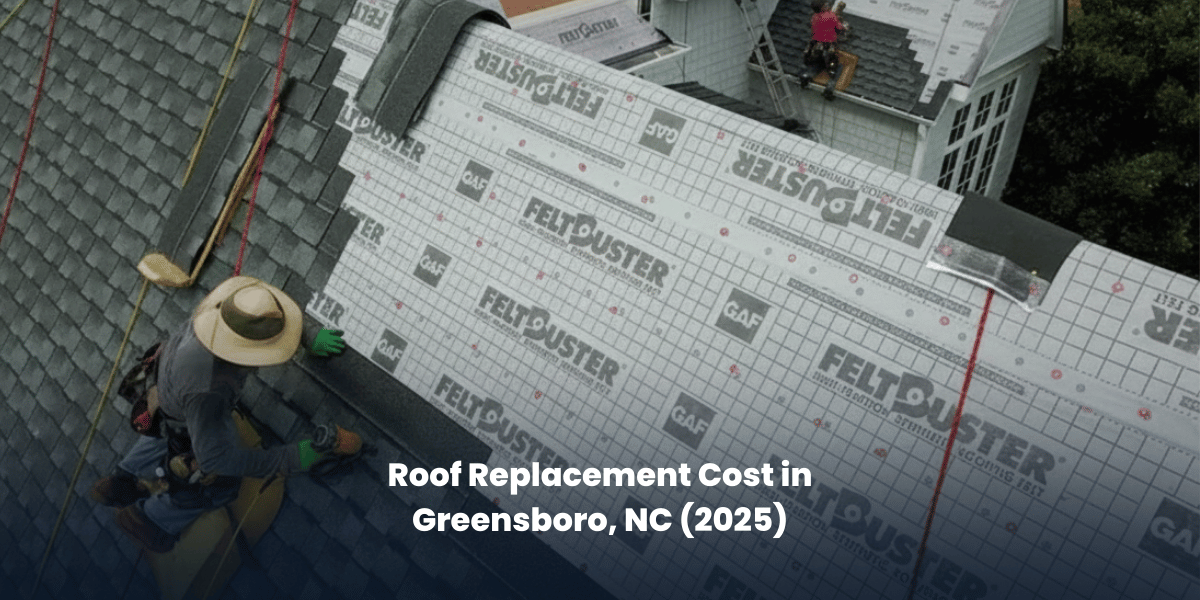
Few home projects come with more uncertainty than replacing a roof, especially when it comes to cost.
Prices in Greensboro can shift based on materials, labor, roof design, and even the time of year. To help make sense of it all, we’ll break down the roof replacement cost in Greensboro, what drives those numbers up or down, and how to plan for a fair, accurate estimate in 2025.
Key Notes
- Greensboro averages $375-$500 per square; typical homes pay $6,000-$12,000 total.
- Asphalt is the most affordable; metal lasts 40-70 years and cuts cooling costs.
- Fall/winter scheduling saves 5-15% versus peak spring/summer demand.
- Storm damage is often covered by insurance with an RCV policy and documentation.
Average Roof Replacement Cost in Greensboro, NC
In 2025, the average roof replacement cost in Greensboro ranges between $375 and $500 per roofing square (one square equals 100 sq ft). That means most homeowners pay between $6,000 and $12,000, depending on roof size, materials, and complexity.
Here’s what that looks like by size:
| Roof Size | Estimated Cost Range |
|---|---|
| 1,500 sq ft (15 squares) | $5,625 – $7,500 |
| 2,000 sq ft (20 squares) | $7,500 – $10,000 |
| 2,500 sq ft (25 squares) | $9,375 – $12,500 |
| 3,000 sq ft (30 squares) | $11,250 – $15,000 |
Larger national companies sometimes quote $600–$800 per square, which can push a 2,000 sq ft roof above $16,000. Greensboro homeowners typically see lower averages thanks to competitive regional labor rates, but costs still depend heavily on the roofing material and project complexity.
Roof Replacement Cost by Material
Every roofing material comes with its own balance of price, performance, and lifespan.
Here’s a breakdown of what Greensboro homeowners can expect in 2025:
Asphalt Shingles (Most Common & Affordable)
- Cost: $375–$500 per roofing square
- Lifespan: 20–30 years
- Why it’s popular: It’s affordable, durable, and reliable in Greensboro’s humid, storm-prone weather. Modern architectural shingles also offer algae resistance and improved wind ratings.
Metal Roofing
- Cost: $700–$1,000+ per square
- Lifespan: 40–70 years
- Why it’s worth it: Metal reflects heat, resists storms, and can lower cooling costs by up to 25%. It’s a smart long-term investment if you plan to stay in your home for decades.
Tile Roofing (Clay or Concrete)
- Cost: $700–$1,150+ per square
- Lifespan: 50–100+ years
- Why people choose it: It offers unmatched longevity and heat resistance – perfect for Greensboro’s hot summers. However, it requires reinforced roof framing and higher upfront costs.
Wood Shakes or Shingles
- Cost: $500–$650 per square
- Lifespan: 20–40 years
- Pros: Beautiful, natural look with solid insulation value.
- Cons: Requires regular upkeep in humid climates to prevent mold or rot.
Synthetic or Composite Roofing
- Cost: $450–$700 per square
- Lifespan: 30–50 years
- Why it’s a good middle ground: It mimics slate or wood while being lighter and more durable. Often more affordable than tile or real slate.
Key Factors That Affect Roof Replacement Cost
No two roofs are priced the same, and these are the main factors driving cost differences:
- Roof Size & Pitch: Larger or steeper roofs require more materials and safety measures.
- Material Choice: Asphalt is cheapest; metal and tile raise costs significantly.
- Labor Costs: Typically 50–60% of the total price. Skilled installers and complex roofs add to labor time.
- Roof Complexity: Hips, dormers, valleys, or chimneys make installation more time-intensive.
- Tear-Off & Disposal: Removing old shingles and debris adds labor and landfill fees.
- Structural Repairs: Damaged decking or ventilation issues found during removal increase costs.
- Accessibility: Multi-story homes or tight property access can raise setup and safety costs.
- Permits & Inspections: Local code compliance and inspection fees vary by municipality.
- Extra Features: Skylights, chimneys, flashing, and gutter integration all add complexity.
- Contractor Expertise: Certified local roofers may cost more upfront but usually include stronger workmanship warranties.
Seasonal Pricing Trends in Greensboro
Timing your project can make a noticeable difference.
- Spring & Summer: High demand, limited scheduling, and higher material prices. Expect to pay a slight premium.
- Fall & Winter: Cooler months bring lower demand, so contractors are more flexible and pricing can drop 5–15%. Greensboro’s mild winters make this a smart time to schedule a roof replacement.
Homeowners who plan ahead (and don’t wait until leaks appear) can often lock in better deals during off-peak seasons.
What a Proper Roof Replacement Estimate Should Include
A trustworthy contractor in Greensboro should always provide a written, itemized estimate. Here’s what to look for:
- Exact roof measurements (adjusted for pitch)
- Material details (brand, type, and warranty)
- Labor and installation breakdown
- Tear-off and waste removal fees
- Decking or structural repair allowance
- Roof penetrations (chimneys, vents, skylights)
- Permits and inspection costs
- Cleanup and site protection details
- Workmanship and material warranties
- Timeline and payment terms
A detailed quote not only prevents surprises but also helps compare contractors on equal footing.
Using Insurance for Roof Replacement in Greensboro
If your roof was damaged by a storm, hail, or wind, homeowners insurance might cover replacement costs.
Here’s how it typically works:
- Coverage Type: Replacement Cost Value (RCV) pays for full replacement (minus your deductible). Actual Cash Value (ACV) accounts for depreciation and pays less.
- Upgrading Materials: You can upgrade to metal or tile, but you’ll usually cover the cost difference unless your policy includes upgrade coverage.
- Documentation: Take clear photos, get an inspection from a certified contractor, and keep all receipts for temporary repairs.
How to Extend Roof Lifespan and Reduce Future Costs
Small habits make a big difference. Here’s how to get the most years out of your investment:
- Schedule professional inspections twice a year (spring and fall).
- Keep gutters clear and water flowing away from the roofline.
- Trim overhanging trees to prevent debris and damage.
- Repair minor leaks or lifted shingles immediately.
- Maintain good attic ventilation and insulation to prevent heat buildup.
- Avoid walking on your roof whenever possible.
- Consider annual maintenance plans for cleaning, resealing, and small repairs.
A well-maintained roof can last 5–10 years longer, easily offsetting the cost of routine upkeep.
Cloud Or On-Premise? Stuck in The Middle?
We offer flexible, seamless integration for optimal results.
Frequently Asked Questions
How long does a roof replacement take in Greensboro?
Most residential roof replacements are completed in one to three days, depending on the size, material, and weather conditions. Larger or more complex roofs may take a bit longer, especially if decking repairs are needed.
Do I need to be home during my roof replacement?
It’s not required, but being home for at least the first day is helpful for quick communication with the crew. Contractors will ensure your property and landscaping are protected whether you’re there or not.
Can I finance my roof replacement in Greensboro?
Yes, many local roofing companies offer flexible financing plans, including 0% or low-interest options. This helps spread out costs without delaying much-needed repairs or replacements.
Is a roof replacement tax deductible?
Generally, roof replacements aren’t tax deductible for primary residences. However, if it’s part of a rental or business property, or tied to energy-efficient upgrades, certain deductions or credits may apply.
Conclusion
Replacing your roof is a major investment, but understanding what goes into the price makes budgeting far less stressful.
In Greensboro, most homeowners spend between $6,000 and $12,000 for an asphalt roof replacement, while premium options like metal or tile can climb higher depending on roof size, pitch, and complexity. Labor typically makes up more than half the cost, and planning during off-peak months can lead to meaningful savings.
The right choice often comes down to lifespan, material, and how long you plan to stay in your home.
If you’re weighing your options, book a free appointment to get a detailed quote, learn which materials suit your roof best, and see how much your replacement will cost before committing.
